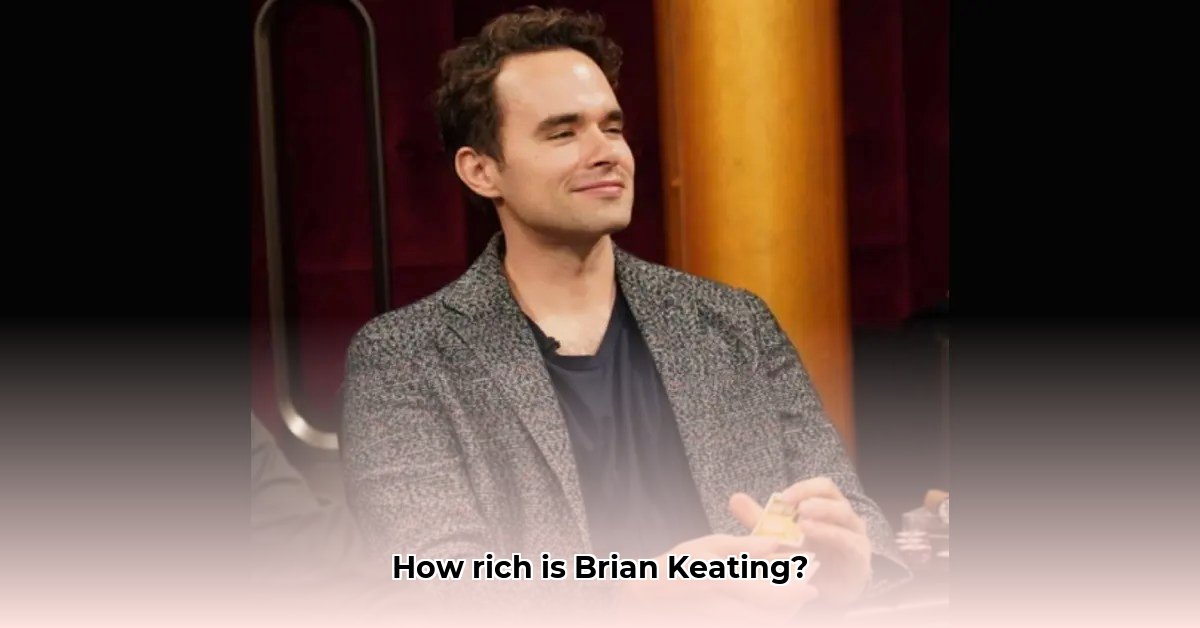
Mapping the Cosmos and a Thriving Career
Brian Keating isn't your average scientist. He's a leading cosmologist, a successful author, a captivating podcaster, and a vocal advocate for science reform. His contributions to our understanding of the universe are significant, spanning massive projects and engaging public communication. But what is Brian Keating's net worth? Pinpointing a precise figure is challenging due to the multifaceted nature of his income streams. However, educated estimates range from a comfortable $1 million to a potentially more substantial $5 million. Let's delve into the factors contributing to this financial success.
Did you know that securing funding for large-scale scientific projects often involves millions of dollars? Keating's leadership in projects like POLARBEAR2 and the Simons Observatory—with budgets approaching $100 million—highlights his exceptional skill in grant acquisition and team management. This isn't just scientific prowess; it's a testament to strategic planning and leadership, crucial for financial success in the scientific realm.
The Scientific Superstar's Impact
Keating's research focuses on the Cosmic Microwave Background (CMB), the faint afterglow of the Big Bang. His work at the forefront of this field, securing substantial funding for ambitious projects, underscores his expertise and influence. A crucial aspect less visible to those outside academia is his skill in securing and effectively managing large research grants. This ability is a key factor contributing to his financial success. This involves not only scientific acumen but also effective proposal writing, project management, and navigating the often complex landscape of grant funding agencies.
Beyond the Lab: Expanding Horizons
Keating's influence extends beyond academia. His engaging books demystify complex cosmological concepts for a wider audience, generating royalties. His popular science podcast, "Into the Impossible," further diversifies his income streams. While these ventures are not traditionally part of an academic salary, they substantially add to his overall earnings, enriching the picture of his net worth. It's this successful diversification that sets him apart.
Challenging the Status Quo: The Nobel Prize Debate
Keating's outspoken critique of the Nobel Prize system has generated considerable debate. While the impact of his advocacy remains to be seen, his bold stance has undoubtedly raised his public profile, potentially benefiting his book sales, podcast sponsorships, and speaking engagements. This unconventional approach may in fact contribute positively to his overall financial success.
Unraveling the Enigma: Financial Transparency in Academia
Precisely determining Keating's net worth is inherently difficult. His income likely stems from multiple sources: his academic salary, book royalties, podcast income, and potential consulting fees. This complicated financial picture makes an exact figure elusive, emphasizing the challenge of quantifying income for those involved in multiple fields of endeavor.
A Legacy Beyond the Balance Sheet
However, Brian Keating's true legacy transcends his net worth. His substantial contributions to cosmology, his engaging public communication, and his courage to challenge scientific norms leave an enduring imprint. This inspirational figure exemplifies the multiple pathways to success in science, demonstrating that impact extends beyond monetary wealth.
How to Secure Large Research Grants in Astrophysics
This section explores the strategies that enable scientists to secure funding for ambitious research projects, mirroring Keating's own success.
Key Takeaways:
- Mastering the grant application process is crucial for success in astrophysics.
- Understanding the nuances of funding agencies such as NASA and NSF is essential.
- Networking and collaborations significantly enhance grant proposal strength.
Navigating the Funding Landscape: NASA vs. NSF
The two main funding sources for astrophysics are NASA and the NSF. NASA operates with structured timelines and deadlines, while NSF offers a more continuous funding cycle. Understanding these differences is crucial for structuring and timing grant submissions. Thorough understanding of submission processes, along with early proposal preparation, significantly improves the chances of receiving funding.
Crafting a Winning Proposal: Key Strategies
Regardless of the agency, a successful grant application requires:
- Compelling Research: Innovative research questions, well-defined methodologies, and clearly defined deliverables are essential. The project's potential impact needs to be clearly communicated.
- Strategic Alignment: The proposal must align with the priorities of the funding agency. Researching and understanding the current strategic goals of the funding agency is fundamental for grant success.
- Teamwork: Collaborative proposals, involving multiple researchers with complementary skills, are generally stronger. Networking and collaboration are critical to the success of grant applications.
- Effective Communication: Crystal-clear communication of the research's significance and feasibility is paramount. The clarity and ease of understanding of the proposal are essential elements.
- Rigorous Review: Seek feedback and thorough review to make sure the proposal is polished and error-free. A thorough internal review before submission greatly enhances the proposal's likelihood of success.
Building a Sustainable Research Career
Securing one grant is a significant accomplishment. Building a lasting career requires:
- Networking: Attend conferences and build relationships with other researchers and program managers. Networking is crucial to learn about funding opportunities.
- Mentorship: Seek out experienced researchers who can provide guidance and support. Learning from experienced mentors can be vital to long-term success.
- Adaptability: The research landscape is ever-changing. Staying adaptable to new technologies and emerging research areas is important.
Risk Mitigation
Grant proposals face various challenges. Proactive risk mitigation is crucial:
| Risk Factor | Mitigation Strategy |
|---|---|
| Missing Deadlines | Meticulous tracking of deadlines; early submission. |
| Ineligible Proposal | Thorough review of eligibility criteria; seek clarification if needed. |
| Inadequate Preparation | Allocate sufficient time for writing; seek thorough peer review. |
| Funding Competition | Develop exceptional proposals emphasizing originality and potential impact. |
Securing substantial research funding, as exemplified by Brian Keating's success, demands scientific brilliance, strategic planning, and effective communication. His career serves as a guide for aspiring scientists, highlighting the importance of meticulous planning and compelling proposal writing.